
eine Nachricht hinterlassen
Wenn Sie an unseren Produkten interessiert sind und weitere Einzelheiten erfahren möchten, hinterlassen Sie bitte hier eine Nachricht. Wir werden Ihnen so schnell wie möglich antworten.

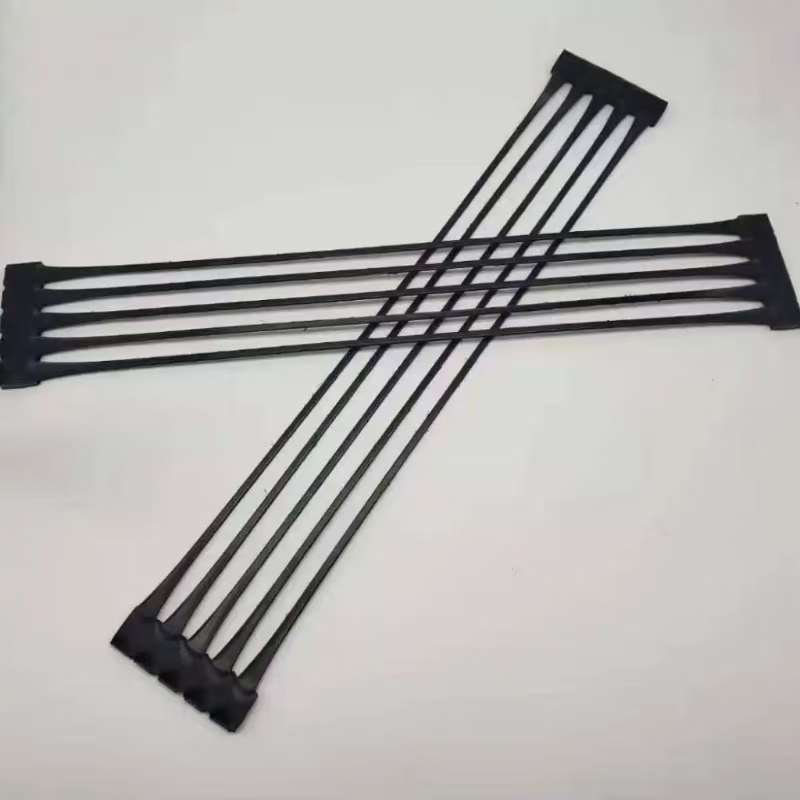
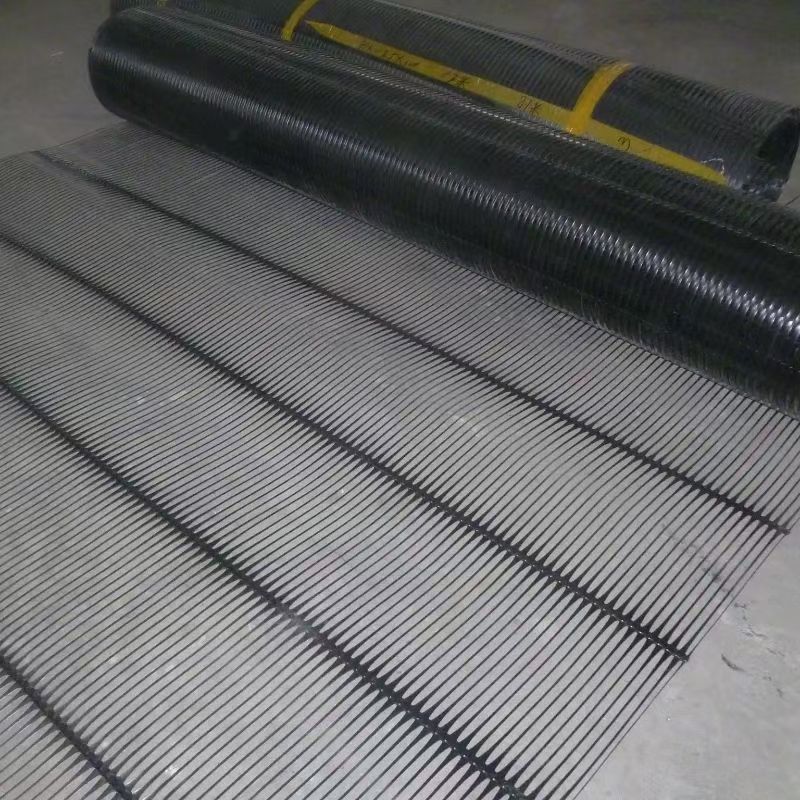
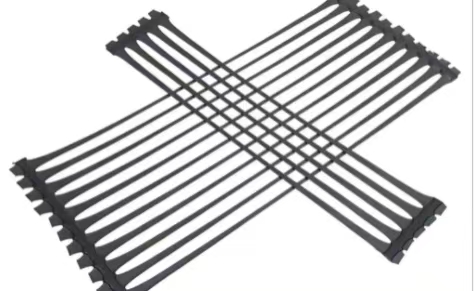
Uniaxial plastic geogrid is a geosynthetic reinforcement material manufactured from polymers and nanoscale carbon black through extrusion and stretching processes. It features a regular grid structure designed to provide tensile reinforcement primarily in one principal direction.
For applications such as riverbank slope reinforcement, coastal embankments, reinforced soil retaining walls, and other soil stabilization projects, NUOKUN offers uniaxial plastic geogrid in TGDG35, TGDG50, TGDG80, TGDG120, TGDG160, and TGDG200 specifications.
In riverbank and coastal engineering, the primary function of uniaxial plastic geogrid is to reinforce soil, improve the stability of reinforced soil structures, and control deformation. For projects exposed to flowing water, fluctuating river levels, or coastal erosion, geogrids generally need to be integrated with suitable fill materials, drainage systems, toe protection, and surface erosion-control measures.
| Item | Value |
| Tensile strength | ≥35KN/m |
| Nominal elongation | ≤11.5% |
| Tensile strength at 2% elongation | ≥7.5KN/m |
| Tensile strength at 5% elongation | ≥21.5KN/m |
| Width | 2-4m (Customizable) |
1. Improve Soil Reinforcement and Slope Stability
Coastal embankments and shoreline slopes may be affected by fluctuating water levels, wave action, and soil self-weight. Uniaxial plastic geogrid provides high tensile strength in the primary reinforcement direction. Through interaction with surrounding soil, they improve the stability of reinforced soil structures and reduce the risk of excessive deformation.
2. Control Soil Deformation
Fill materials in coastal projects may experience long-term loads and changing environmental conditions. When properly designed and installed, uniaxial geogrids restrain lateral soil movement, distribute stresses within reinforced fill, and improve the mechanical performance of the structure.
3. Support Reinforced Soil Retaining Walls
Uniaxial plastic geogrids are commonly considered for reinforced soil retaining walls used in coastal roads, port infrastructure, and shoreline development projects. By selecting suitable geogrid strength, reinforcement length, and vertical spacing, engineers can design reinforced soil structures to meet project-specific stability requirements.
4. Improve the Performance of Reinforced Fill
In suitable ground conditions, uniaxial geogrids interact with surrounding fill materials to improve the load-bearing performance and stability of reinforced soil structures. They can be used in selected coastal road subgrades, embankments, and other infrastructure projects where soil reinforcement is required.
5. Work with Other Coastal Protection Measures
Geogrids do not independently prevent wave erosion or seawater scour. In coastal projects exposed to waves, flowing water, or tidal fluctuations, geogrids should be incorporated into a properly designed engineering system. Depending on site conditions, this system may include suitable fill materials, drainage, toe protection, revetment structures, and surface erosion-control measures.
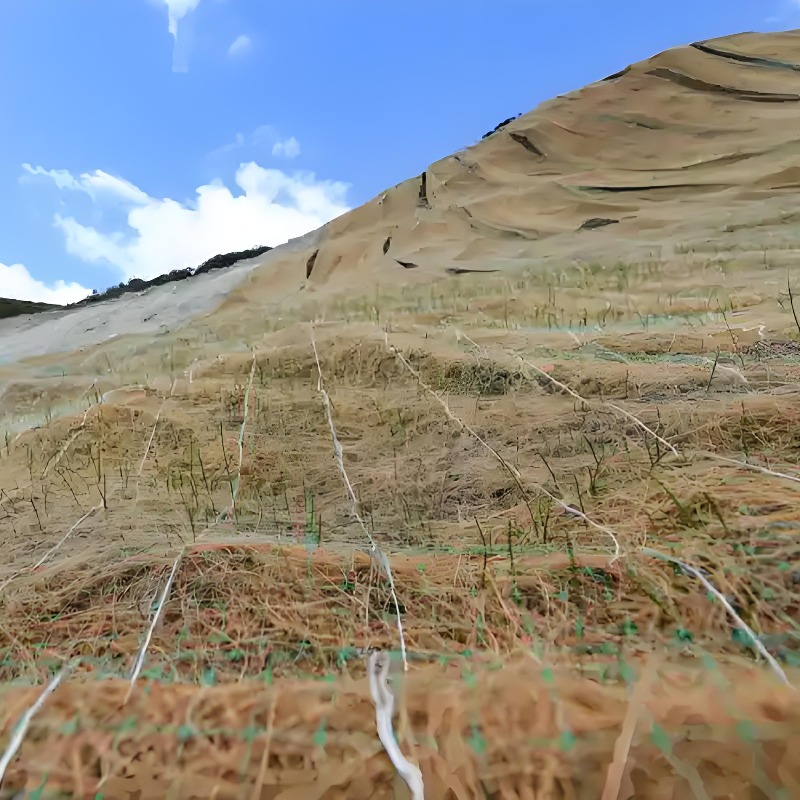
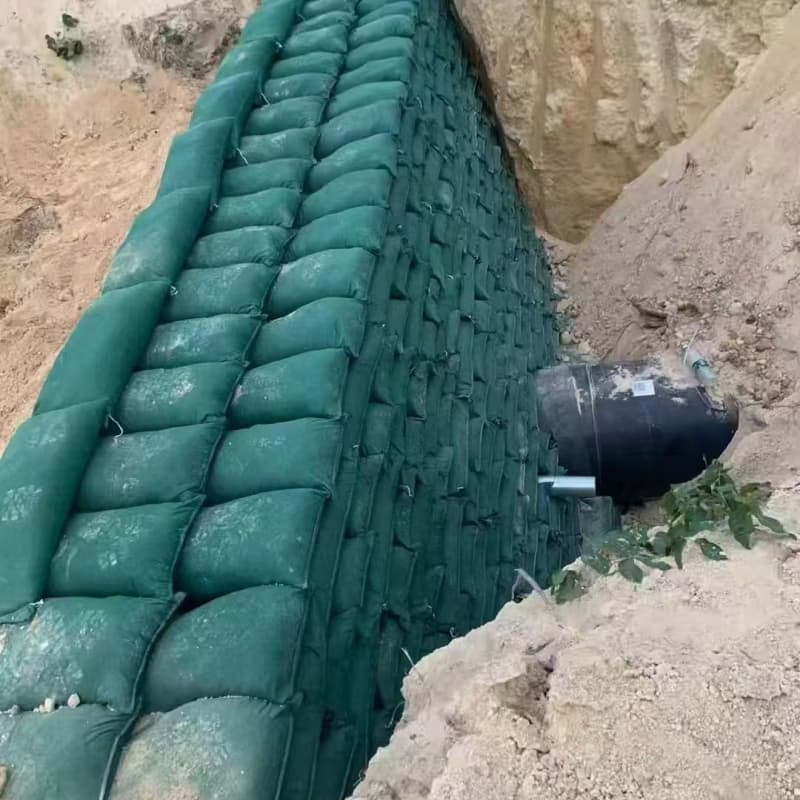
In June 2024, the Oregon coast carried out a landslide stabilization project using a geogrid-reinforced soil wall. The project needed to stabilize the slope while maintaining a natural appearance in an environmentally sensitive setting. For this type of coastal slope stabilization, the challenge was to improve soil stability while also addressing surface soil loss and the establishment of vegetation on the reinforced wall face.
The project used high-density polyethylene geogrids to construct a reinforced soil wall and examined construction methods for near-vertical reinforced walls, together with approaches to vegetation establishment. The report explains that strips of sod could be placed between the backfill and the geogrid. Where sod was not installed against the face, coarse backfill or filter fabric was recommended to limit the loss of fine soil particles.
The report concluded that geogrid-reinforced soil wall construction was practical and identified strength and ultraviolet resistance as important characteristics of the geogrid materials used. For comparable coastal slope stabilization projects, a properly designed geogrid reinforcement system supports soil stability and provides an option for more natural-looking slope construction.
Q1: What's in it for you when you choose us?
Product Specifications: GB/T17689-2008.
Certification: GB/T19001-2016/ISO9001/GRI-GM13.
Competitive Prices: Factory Prices, No Middlemen.
Q2: What Is the Appropriate Geogrid Overlap Length?
Some construction specifications use overlap lengths of approximately 15–30cm, depending on subgrade preparation and installation conditions. The applicable requirement should be confirmed against the project drawings, product installation instructions, and trial installation results.
Q3: How Long Does a Geogrid Last?
Generally speaking, its service life is 10-30 years. But geogrid durability depends on raw materials, manufacturing processes, long-term loading, temperature, chemical exposure, and ultraviolet radiation.
Q4: How does a geogrid work?
Geogrid works by distributing loads over a wider area of soil, effectively increasing the soil’s bearing capacity. It reinforces weak soils by interlocking with them, creating a stable platform that can support heavy loads such as roads, retaining walls, and embankments. This interaction prevents soil movement and enhances structural integrity. Geogrids have openings, called apertures, which allow the aggregate to strike through and provide confinement and interlock, further enhancing their ability to stabilize and reinforce soil structures.
eine Nachricht hinterlassen
Scan to Wechat/Whatsapp :



 English
 Français
 Deutsch
 Русский
 Español
 Português
 عربي
 Tiếng Việt
 Indonesia
 हिन्दी



 IPv6 NETZWERK UNTERSTÜTZT