
eine Nachricht hinterlassen
Wenn Sie an unseren Produkten interessiert sind und weitere Einzelheiten erfahren möchten, hinterlassen Sie bitte hier eine Nachricht. Wir werden Ihnen so schnell wie möglich antworten.

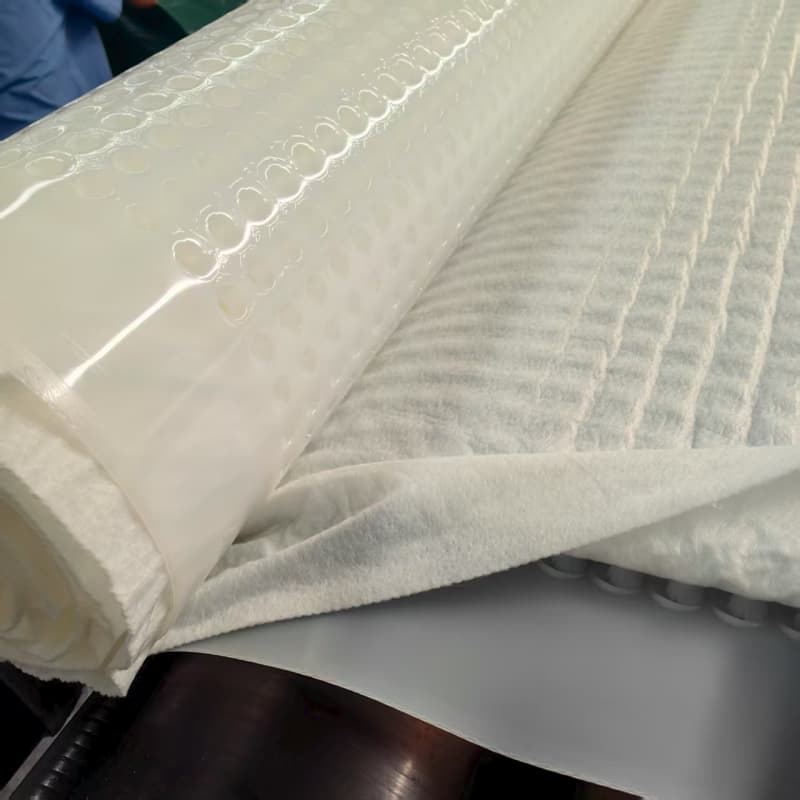
Beim Kauf Geosynthetische Tondichtung Für ein Absetzbecken in einer Kupfermine werden üblicherweise Bentonitmassen von 3,7, 4,0 und 4,5 kg/m² verwendet, um die Leistungsfähigkeit von GCL zu vergleichen. Die Bentonitmasse pro Flächeneinheit ist jedoch nicht der einzige Faktor, der die Leistung von GCL bestimmt.
Als erster Kaufvergleich:
Es ist jedoch wichtig zu beachten, dass 3,7, 4,0 und 4,5 kg/m² keine drei von ASTM definierten GCL-Qualitäten darstellen. Beim Kauf von GCL sollte der Käufer außerdem den Bentonit-Quellindex, den Flüssigkeitsverlust, die hydraulische Leitfähigkeit und die mechanischen Eigenschaften des GCL überprüfen.
| Vergleich | 3,7 kg/m² | 4,0 kg/m² | 4,5 kg/m² |
| Designmarge | Relativ niedriger | Medium | Relativ höher |
| Zunahme gegenüber 3,7 kg/m² | Ausgangswert | +8,1 % | +21,6 % |
| Bentonitbeladung pro Fläche | Base | Höher | Höher |
| Typische Position im Einkauf | Basisreferenzoption | Zwischenoption | Option mit höherer Beladung |
| Transportgewicht | Untere | Medium | Höher |
1. Quellindex: ≥24 ml/2 g
Der Quellindex misst das Quellvermögen der Bentonitkomponente nach der Hydratation. Einige GCL-Produktspezifikationen verwenden einen Quellindex von ≥ 24 ml/2 g gemäß ASTM D5890. Bei der Wasseraufnahme bildet Bentonit eine Hydratationsschicht mit geringer Permeabilität. Das Erreichen dieses Wertes von 24 ml/2 g allein beweist jedoch nicht, dass ein GCL für das Prozesswasser in Kupferbergbauprojekten geeignet ist.
2. Flüssigkeitsverlust: ≤18 ml
Der Flüssigkeitsverlust ist ein weiterer wichtiger Parameter beim Vergleich von GCL-Produkten. Einige Produktspezifikationen verwenden die Angabe: Flüssigkeitsverlust ≤18 ml, ASTM D5891. Beim Kauf von GCL ist es ratsam, tatsächliche Testdaten anzufordern, anstatt sich mit einer Aussage wie „ASTM-konform“ zufriedenzugeben.
3. Hydraulische Leitfähigkeit: ≤5 × 10⁻⁹ cm/s
Die hydraulische Leitfähigkeit ist einer der wichtigsten Parameter zur Bewertung der hydraulischen Leistungsfähigkeit eines GCL (Ground-Containers). Einige GCL-Produktspezifikationen verwenden die Angabe: hydraulische Leitfähigkeit ≤ 5 × 10⁻⁹ cm/s, was ≤ 5 × 10⁻¹¹ m/s entspricht.
Es ist wichtig klarzustellen, dass 5 × 10⁻⁹ cm/s keine universelle ASTM-Anforderung für jedes GCL-Produkt darstellt. ASTM D5887 beschreibt ein Prüfverfahren zur Bestimmung der hydraulischen Leitfähigkeit von GCLs. Die tatsächlichen Leistungsanforderungen hängen von der Produktspezifikation und der Projektplanung ab.
4. Bentonitmasse pro Flächeneinheit: ≥3,7 kg/m²
Die Bentonitmasse pro Flächeneinheit ist einer der einfachsten Vergleichsparameter für Käufer. Einige GCL-Produktspezifikationen schreiben eine Mindestbentonitmasse von ≥ 3,7 kg/m² vor. Daher kann beim Kauf einer GCL-Folie für Absetzbecken in Kupferbergwerken der Wert von 3,7 kg/m² als Referenzwert dienen, gefolgt von einem technischen Vergleich mit Produkten mit 4,0 kg/m² und 4,5 kg/m².
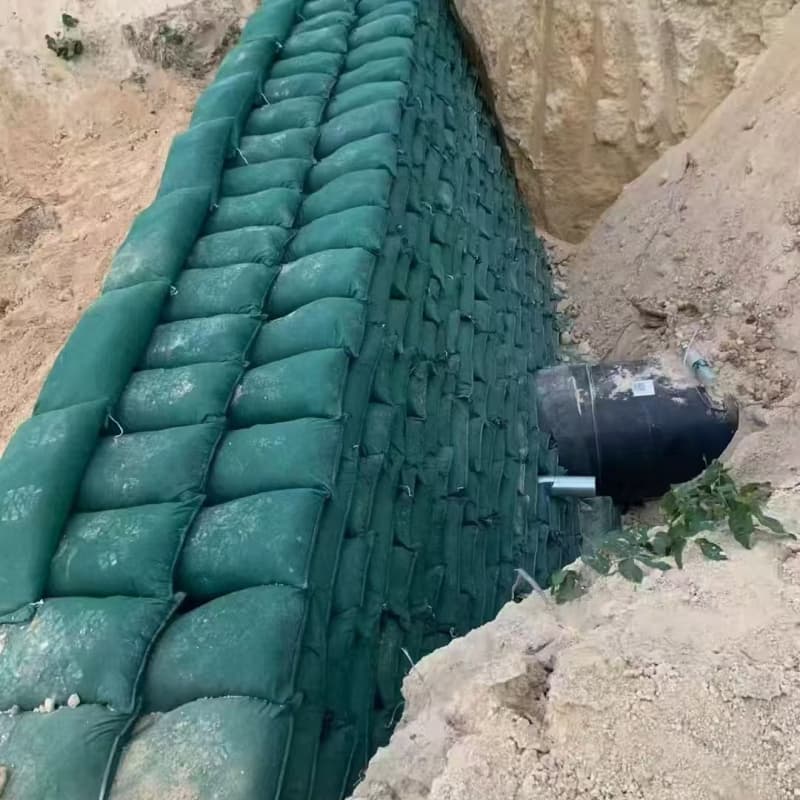
Das Kupferminenprojekt Carlota in Arizona, USA, nutzte eine Kombination aus Geokunststoff-Tondichtungsbahn (GCL) und Geokunststoff-Dichtungsbahn, um ein Verbundsystem für die Kupferhaufenlaugung zu schaffen. Das Projekt stand vor mehreren Herausforderungen, darunter hohe Erzmengen, Hangneigungen von ca. 2:1 (horizontal:vertikal) in einigen Bereichen, begrenzte Verfügbarkeit und Transportprobleme von geeignetem Ton sowie ein enger Zeitplan. Eine herkömmliche, verdichtete Tondichtung hätte den Transport großer Tonmengen zur Baustelle erfordert und den Logistik- und Materialaufwand erheblich erhöht.
Durch den Einsatz von GCL (Geolaminierte Auskleidungsfolie) wurde ein werkseitig hergestelltes Auskleidungsmaterial bereitgestellt, das direkt zur Baustelle transportiert werden konnte, wodurch der Materialeinsatz von Ton reduziert wurde. GCL bot zudem geringe Durchlässigkeit, Dämpfung und Scherfestigkeit und bildete zusammen mit der Geokunststoffdichtungsbahn eine kombinierte Sickerwassersperre. Projektinformationen zufolge konnte eine LKW-Ladung GCL etwa 150 LKW-Ladungen Ton ersetzen, wodurch der Materialtransportaufwand erheblich reduziert wurde. Dieser Fall zeigt, dass bei der Auswahl von GCL für Kupferbergbauprojekte hydraulische Eigenschaften, mechanische Eigenschaften, Materialverfügbarkeit, Transportkosten und die tatsächlichen Gegebenheiten vor Ort berücksichtigt werden sollten – und nicht allein die Bentonitmasse pro Quadratmeter.
Die Wahl einer GCL-Auskleidung für ein Absetzbecken in einer Kupfermine sollte nicht allein auf der Bentonitbeladung basieren. Entscheidend ist, die GCL-Spezifikation mit den konkreten Projektanforderungen abzustimmen. Als praktischer Vergleich können 3,7 kg/m² als Referenzwert, 4,0 kg/m² als mittlere Option und 4,5 kg/m² als Option mit höherer Bentonitbeladung herangezogen werden.
Für die Auskleidung von Absetzbecken in Kupferminen sollten Käufer neben der GCL-Folie auch den Quellindex, den Flüssigkeitsverlust, die hydraulische Leitfähigkeit, die Zugfestigkeit, die Schälfestigkeit und die chemische Beständigkeit gegenüber dem Prozesswasser vergleichen. Die beste GCL-Folie ist nicht unbedingt die mit dem höchsten Bentonitgehalt. Ein geeignetes Produkt sollte die erforderliche Sickerwasserabdichtung gewährleisten und gleichzeitig ein ausgewogenes Verhältnis zwischen technischer Leistung, Materialverbrauch, Transport und Gesamtprojektkosten bieten.
1. Benötigt ein Absetzbecken in einer Kupfermine immer eine GCL von 4,5 kg/m²?
Die Angabe von 4,5 kg/m² ist keine zwingende Voraussetzung für jedes Absetzbecken in einer Kupfermine. Die geeignete Spezifikation hängt von der Projektplanung und den tatsächlichen Betriebsbedingungen ab.
2. Was sind die gängigen Standards für GCL?
GCL-Produkte werden üblicherweise nach internationalen Standards wie ASTM und ISO geprüft. Gängige ASTM-Prüfmethoden umfassen ASTM D5890 für den Quellindex, ASTM D5891 für den Flüssigkeitsverlust, ASTM D5887 für die hydraulische Leitfähigkeit und ASTM D6768 für die Masse pro Flächeneinheit von GCL. Die erforderlichen Leistungswerte müssen so ermittelt werden, dass sie der Projektplanung, den geltenden lokalen Spezifikationen und den Produktdaten des Herstellers entsprechen.
3. Warum ist die Wasserchemie für GCL-Anwendungen in Kupferminen wichtig?
Da pH-Wert, Salzgehalt und Ionenkonzentration des Grubenwassers das Quellverhalten von Bentonit beeinflussen können, sollte die chemische Kompatibilität von GCL mit dem tatsächlichen Projektwasser geprüft werden.
eine Nachricht hinterlassen
Scan to Wechat/Whatsapp :



 English
 Français
 Deutsch
 Русский
 Español
 Português
 عربي
عربي Tiếng Việt
 Indonesia
 हिन्दी



 IPv6 NETZWERK UNTERSTÜTZT